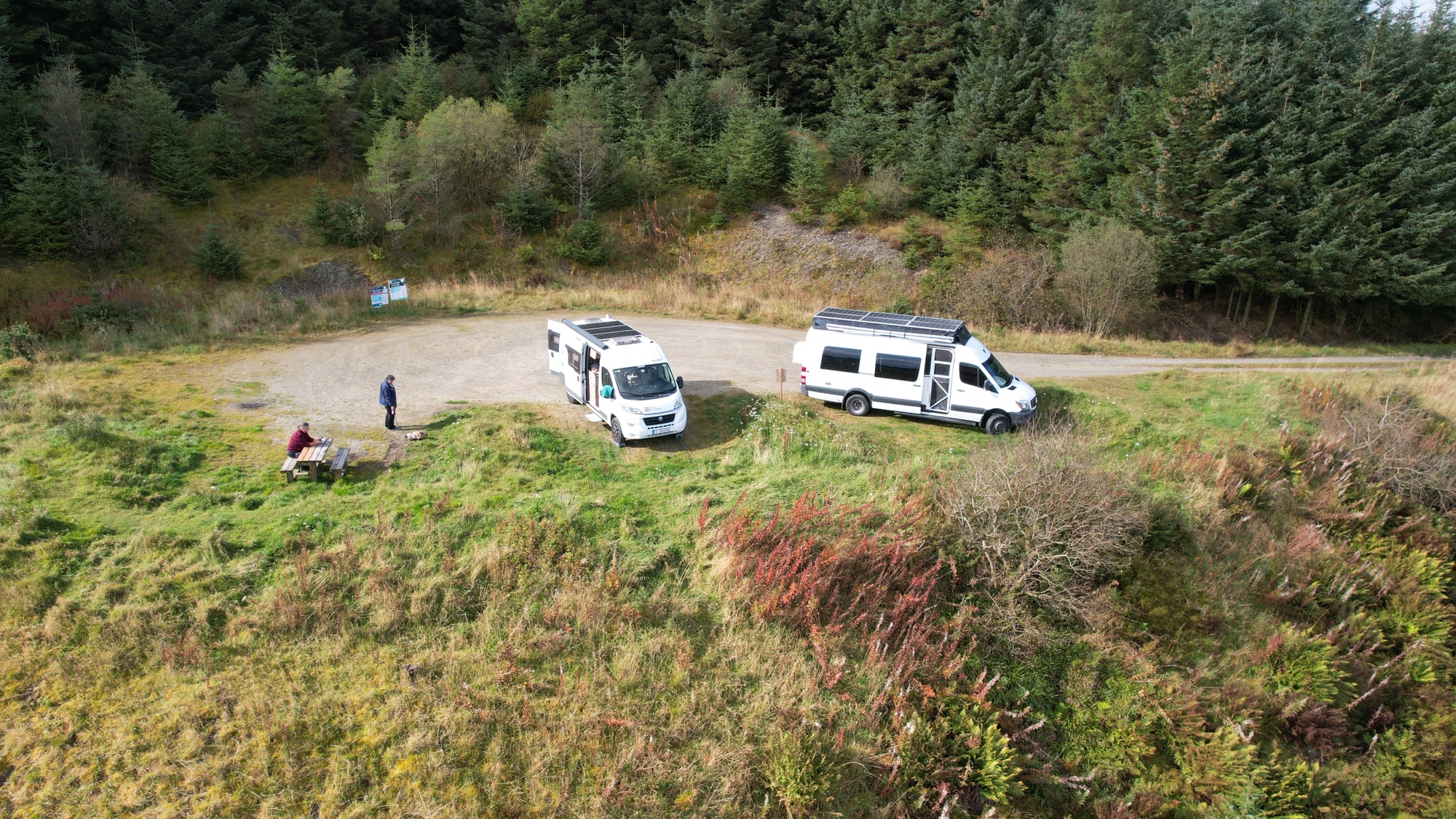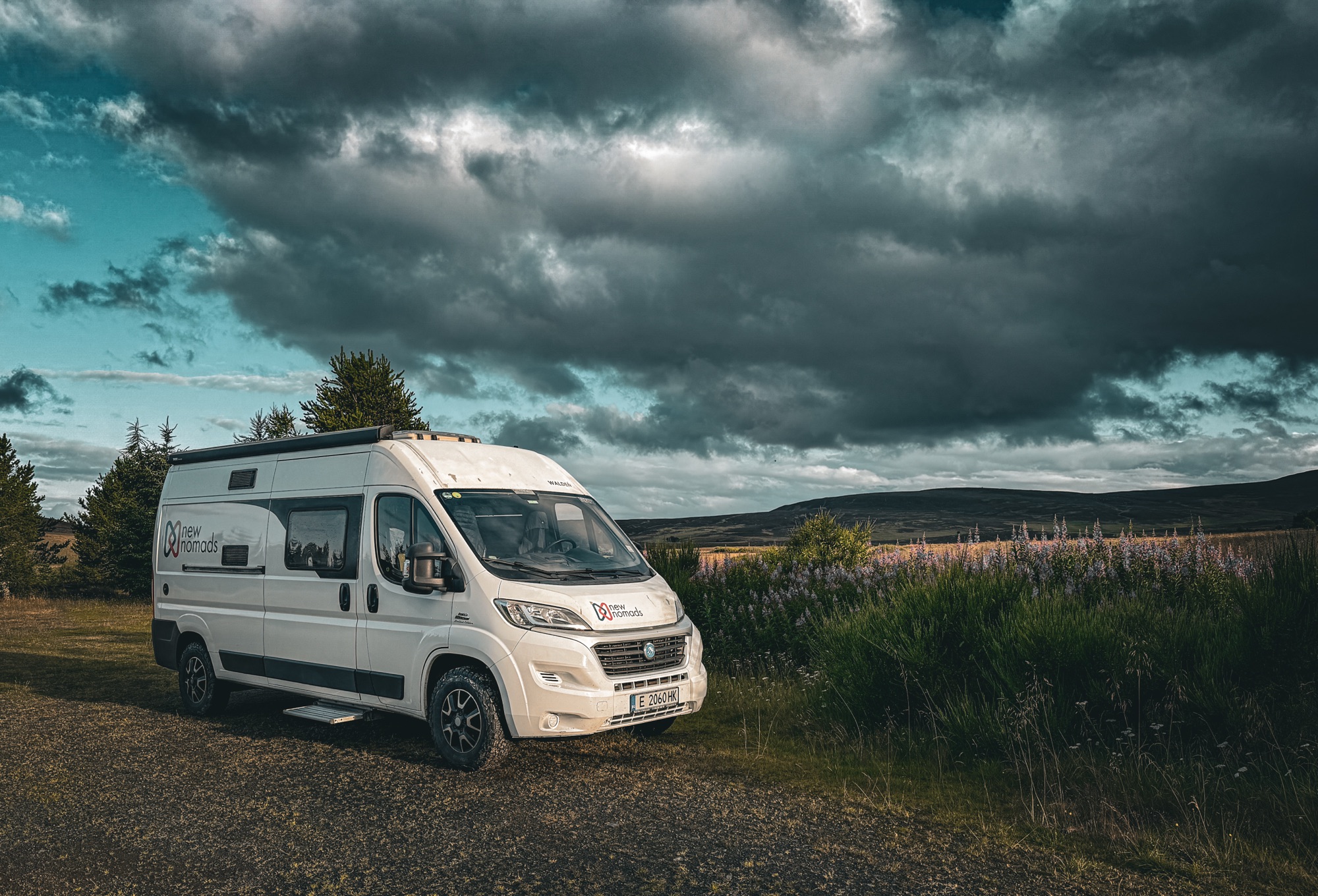

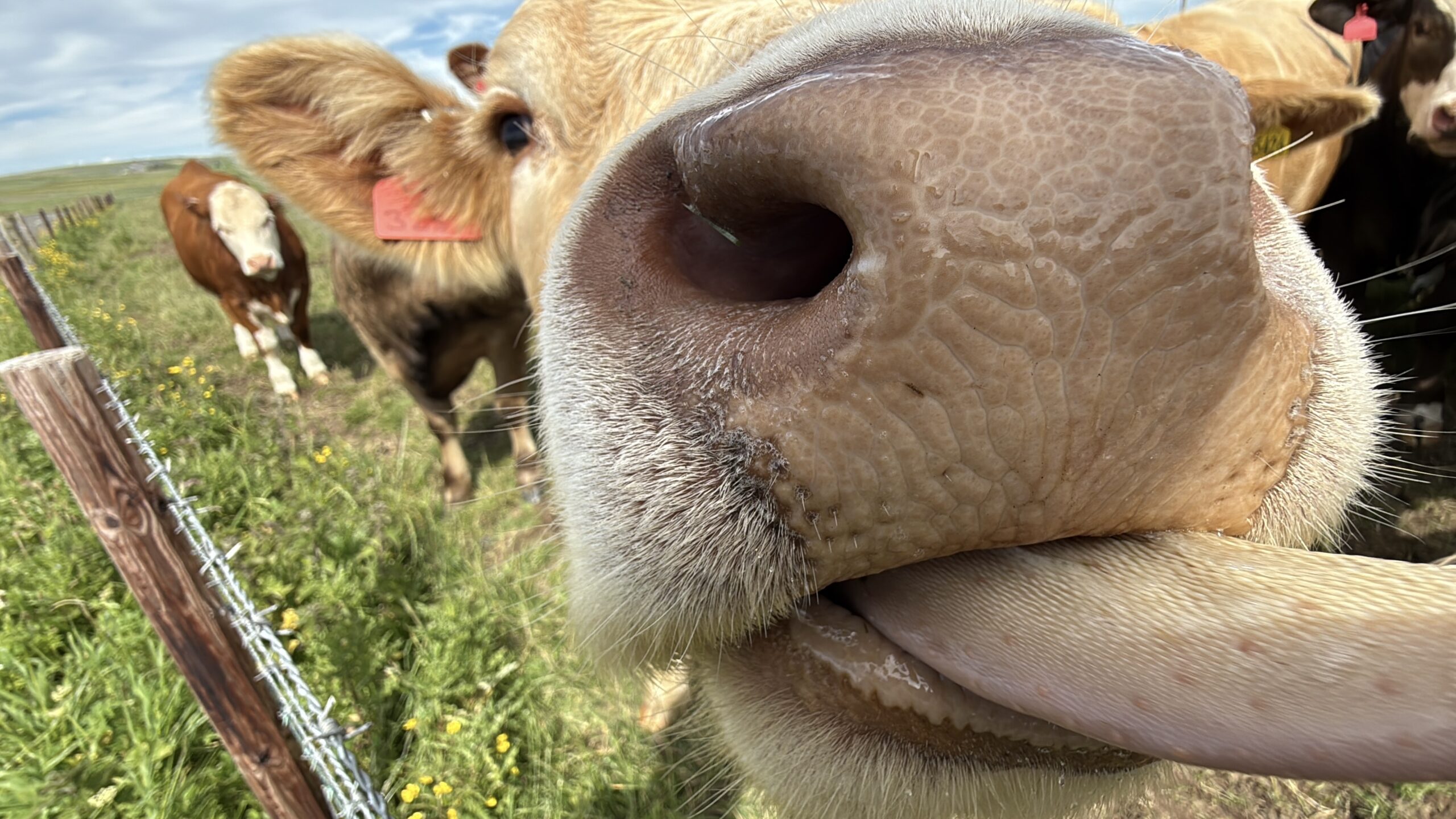
When people ask how we meet anyone, living the way we do, the honest answer is that we mostly don’t go looking. We park up, put the kettle on, and wait to see who wanders over. On one of our last evenings on the Mainland of Orkney, parked beside the old ferry port with the sea on one side and a low green field on the other, the locals who came to say hello were a herd of cattle.

They were across the road when we arrived, heads down in the grass, paying us no mind at all. But cattle are curious in the slow way that cows are curious, and by the time the kettle had boiled a few of them had drifted over to the fence to have a proper look at us. One came right up, close enough that we could hear her breathing, and studied the van and then studied us with those enormous, patient eyes. We studied her back. It felt, for a moment, like being introduced.
At the end of the road
We had come more or less to the end of the road. This was the old ferry port, a quiet corner where the boats used to come and go and where now not much happens but the sea working away at the stones. It is exactly the sort of place we love to stop for a night: no facilities, no neighbours of the human kind, just a level spot to sit and watch the light move on the water.


You meet the locals differently out here
You meet the locals differently on the road. Sometimes it is the woman in the shop who tells you which day the swell will be up, or the man at the launderette who steers you off a bad layby. And sometimes it is a field of cattle who decide, collectively and without hurry, that you are worth ambling over to inspect. We have come to count them all as introductions. A place tells you a good deal about itself by who comes to say hello, and how.
Salt in the grass
What has struck us, here and everywhere we have been in these islands, is how well the animals seem to live. The cattle in Orkney are fat and glossy and entirely unbothered, standing knee-deep in some of the thickest, greenest grass in Scotland, grass that grows in air half made of sea. You can almost taste the salt on it. There is a contentment to them that would be hard to fake, an unhurried, well-fed ease, and it is the same whether you find them here on the Mainland or out on the smaller isles. Whatever else is true of these places, the beasts in the fields are having a wonderful life.
We stood at the fence a good while longer than we had meant to, the way you do, and the cattle stood too, and for a few minutes nobody had anywhere else to be. Then the light began to go, and we said goodnight to the neighbours and climbed back into the van. You don’t always get to choose who you meet on the road. But we have rarely met a local we liked more than a contented cow at a fence, on a quiet evening, with the old ferry port and the sea at our backs.
More from Orkney: long, empty beach walks, and two rainy weeks among the stones and the Churchill Barriers.
There is plenty more where this came from. See every stop of our Scottish summer in the Scotland journal.