
The calendar said July. The air said otherwise.
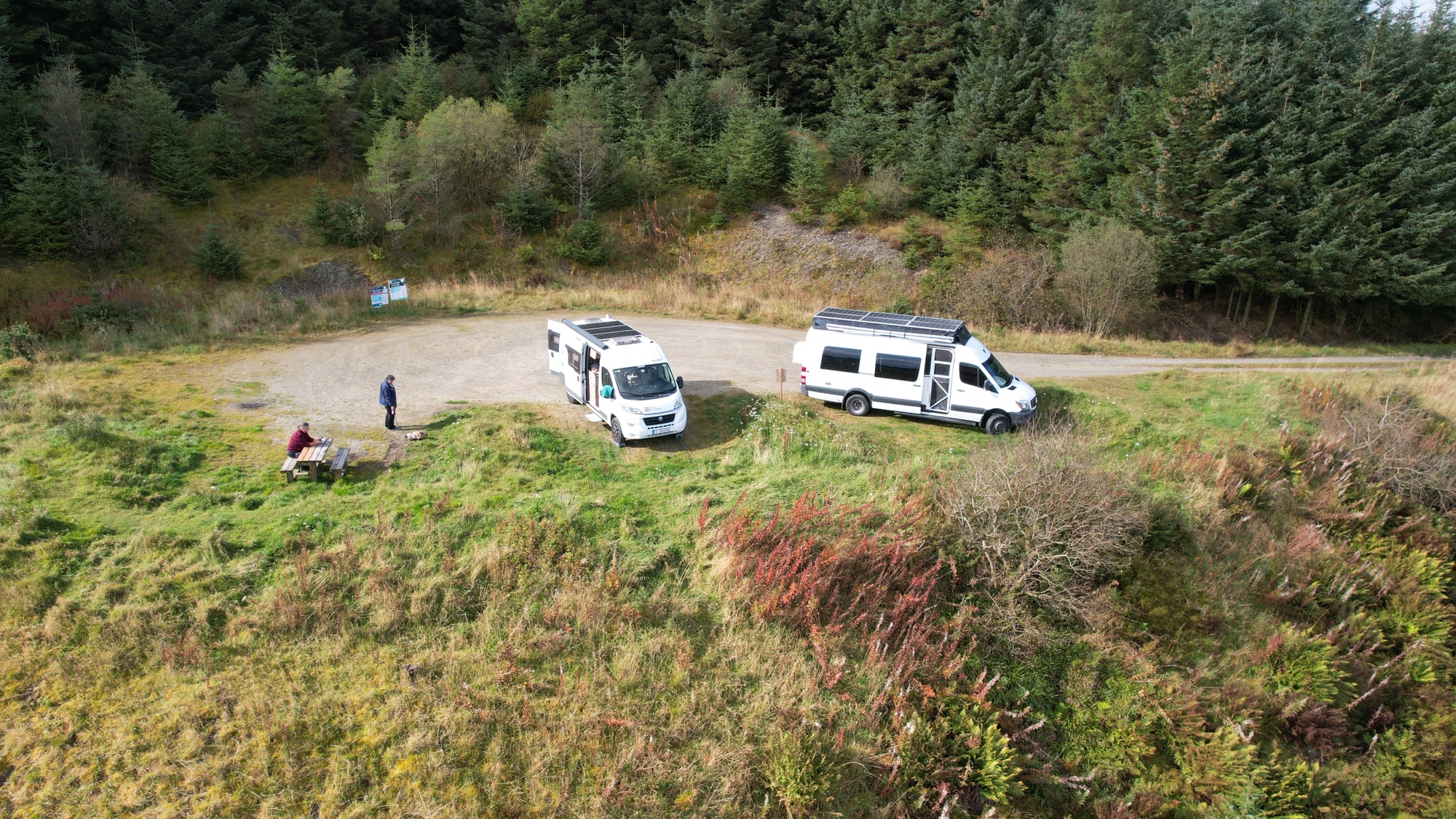
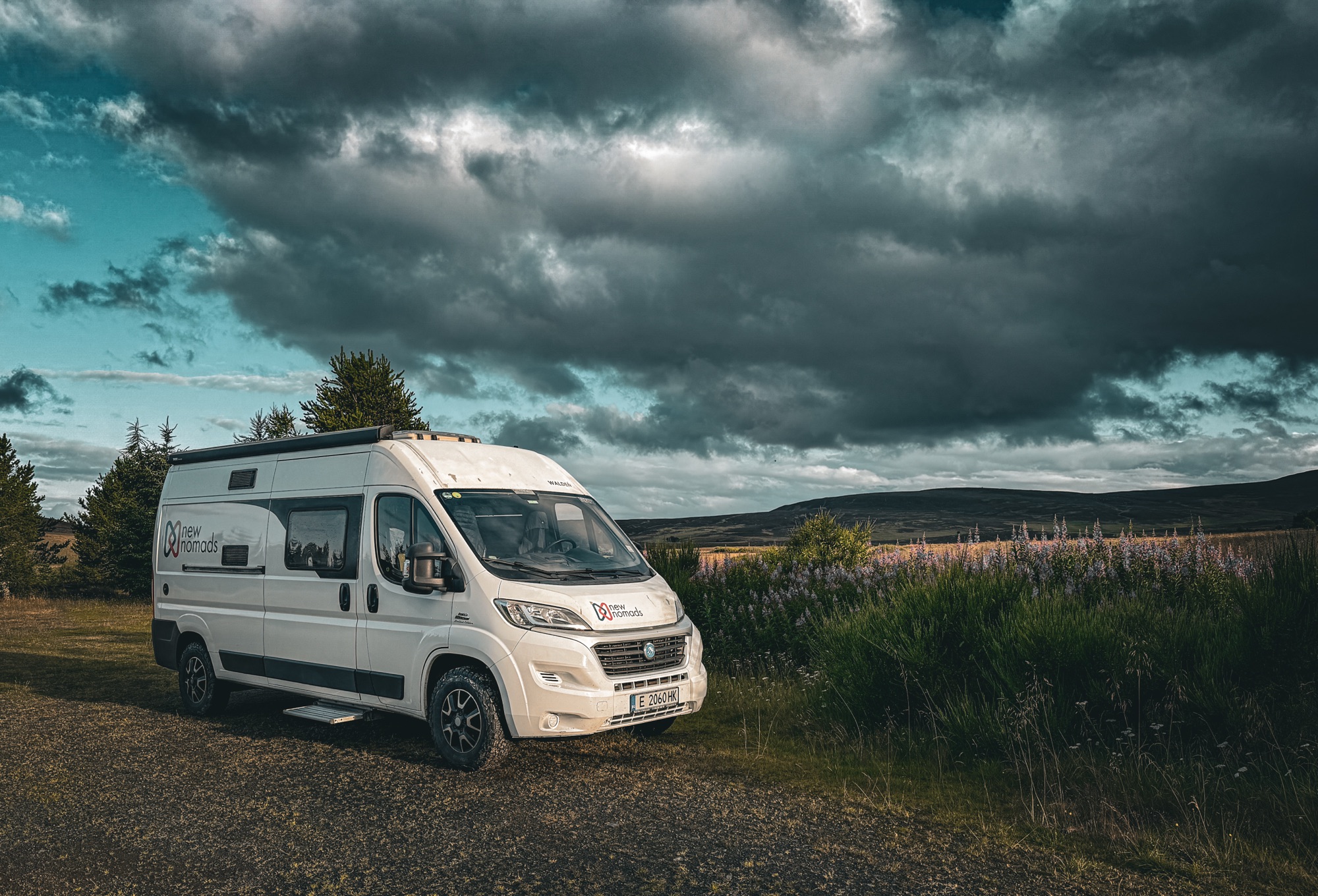
We had parked Walden for the night on the western edge of the Cairngorms National Park, in that in-between country where the farms give up and the mountains have not quite started. It had rained most of the afternoon, the steady, unhurried kind that Scotland does better than anywhere, and when it finally stopped the evening opened up clear and gold. So we laced up and walked out into it, and within ten steps we were both reaching for another layer. Midsummer, technically. The air was crisp enough to see your breath by, and it carried that clean, cold edge that in New England we would file under October.
What the rain leaves behind

A place smells different after rain, and this one smelled like several places at once. The bogs came first, that deep, loamy, peat-and-iron smell that rises off the wet ground like something breathing, older than anything with a name. Then the pines, sharp and resinous where the track cut through a stand of forest, every needle rinsed and amplified. And underneath it all the green smell of soaked grass running away in long rolls toward the hills, the whole countryside wrung out and hung up to dry in the last of the light.
We walked without much of a plan, which is the best way to walk here. The track climbed gently along the shoulder of the valley, bog on one side, pine on the other, the light stretching longer and lower until every tussock threw a shadow twice its size. No cars. No other walkers. Just curlew calls somewhere off in the wet ground and the small wind that comes down off high country in the evening, cold and clean, like the mountains exhaling.
The hillside that was listening
Partway up the valley we came around a fold in the hill and stopped, because something man-made stood where nothing man-made had any business being. A mast, guyed against the wind, hung with antennas, alone on the open ground with nothing else in sight but heather and sky. Our first guesses were not generous. A phone mast, maybe, or some forgotten bit of farm kit.

It was neither. On a closer look it turned out to be a wildlife tracking station, a receiver that listens for tagged animals as they move through the glen. This valley is a corridor. As the season turns, the game comes down off the high ground, deer drifting from the tops toward the lower meadows where the grazing holds on, and this quiet piece of science stands out here in all weathers taking the register. Somewhere a researcher knows which animals passed us in the dark last night, and roughly what they thought of the rain.
We stood with it a while, oddly pleased by it. There was something companionable in the idea that this empty-feeling valley is anything but empty, that the hillside is crossed all night by traffic we never see, and that someone cares enough to count it. The tourists an hour south were queueing for distillery tours. Up here, the only queue was deer, moving downhill, being politely noted.
Diane’s Cullen skink
The cold that made the walk so sharp also decided dinner. There is exactly one right answer to a July evening in Scotland that behaves like autumn, and Diane makes it better than anyone: Cullen skink, the smoked haddock chowder that was born on this coast, thick with potato and onion and unapologetic about the cream.

It is also, for her, a dish with a homing signal of its own. Her mother made finnan haddie back in New England, the same smoked fish in the same warm milk, carried across the Atlantic generations ago by Scots who packed their recipes when they could not pack much else. So a bowl of Cullen skink in a van on the edge of the Cairngorms is Diane cooking her way back down her own valley, from the high ground of memory to somewhere warm and low. We ate it with the door cracked open to the cold on purpose, because soup this good deserves weather that earns it.
Nothing about the evening will make a brochure. A walk up a nameless track, a strange mast on a hill, a bowl of soup. But this is the Scotland we keep coming back for, the one just off the edge of the map the coaches use: rinsed air, long light, a valley quietly full of life on the move, and dinner that tastes like two coastlines at once. Few tourists ever see it. The deer see it every night, and now, in a small way, so do we.