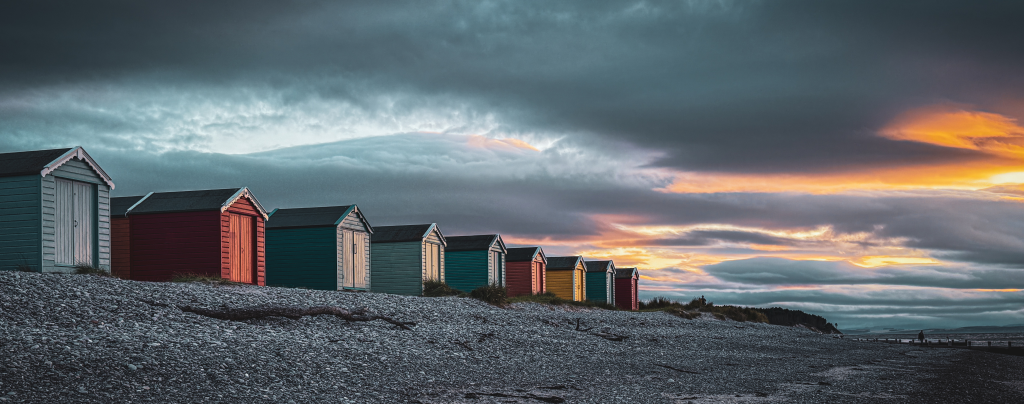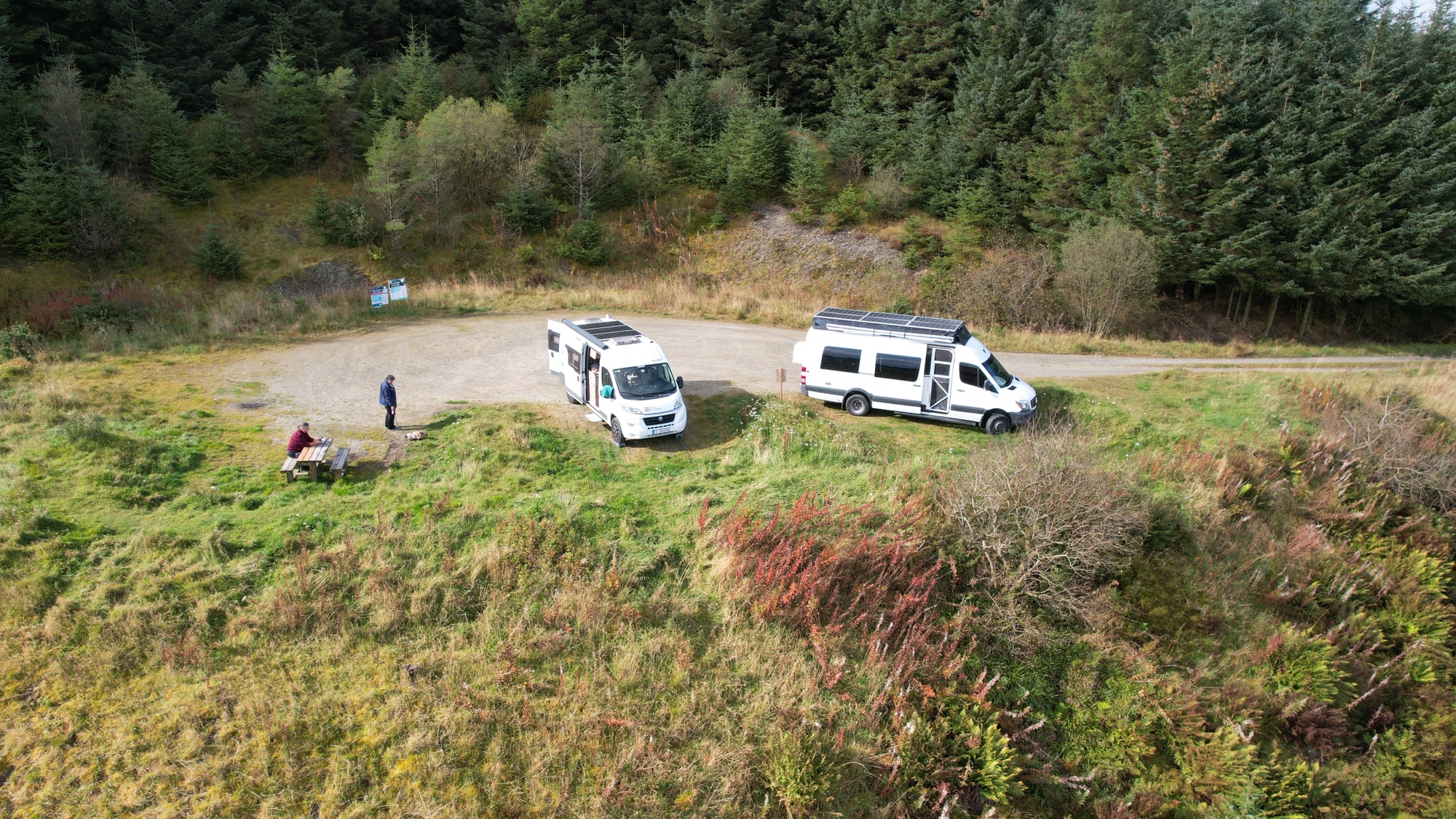

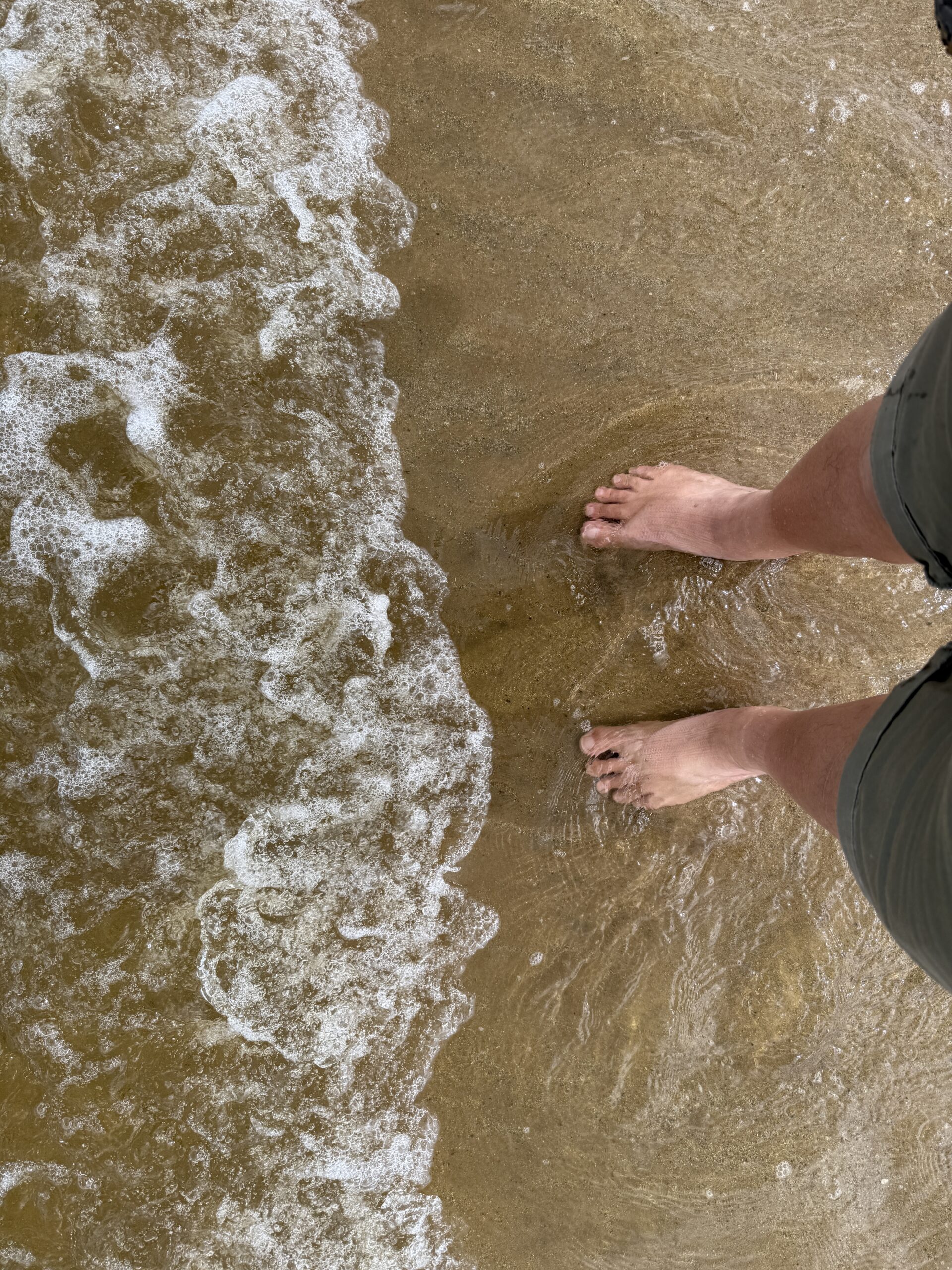
Some mornings the sea is so far out at Philorth that you could believe it had gone for good. We walked out across a quarter mile of wet, mirrored sand that had been under several feet of water a few hours earlier, and would be again by afternoon, and it stopped me the way it sometimes does, with the plain enormity of what a tide actually is.

What the tide is actually telling you
We say “the tide comes in” as if the water decides to arrive, but it does not really move toward us so much as the whole ocean leans toward the moon while the Earth turns underneath it. The moon’s gravity lifts a great slow heap of water on the side of the planet facing it, and a matching one on the far side, and as the ball we live on rotates we pass through those bulges, twice a day, a little over twelve hours apart. The sun adds its own weaker pull, and when sun and moon line up at the new and full moon you get the big spring tides; when they tug at right angles you get the gentler neaps.
I find that genuinely hard to hold in my head, standing at the edge of the beach. The water at my feet is being moved by a rock a quarter of a million miles away. Not as a metaphor, not roughly, but actually: the whole North Sea, leaning on schedule toward the moon.

Proof you can stand in
What gets me is that it is proof. You do not need a telescope or a physics class to know that we are on a spinning ball turning through space, tugged on by other bodies out there in the dark. You just need to stand on a wide beach twice in a day and notice that the sea is in a completely different place. The tide is the most patient demonstration I know that the ground under us is not fixed and central and still, but a planet, in motion, held in a web of pulls we mostly never feel.
It fills me with a kind of quiet awe every single time. All that water, an unimaginable tonnage of it, lifted and set back down twice a day by the moon and the sun, without a sound and without a switch, and it has been doing exactly this for far longer than there have been eyes to watch.
The light that keeps the count
Along the coast, Kinnaird Head light has watched more of these tides than anyone. It stands on the headland at Fraserburgh, one of the first lighthouses ever raised on this coast, and for well over two hundred years it has guarded the ships working the North Sea in and out of the dark. There is something fitting about it keeping company with the tide, the two of them marking time in their different ways: one a steady, deliberate beam made by people to keep each other safe, the other a vast, indifferent, beautiful clock run by the sky.

We stayed until the sea began, almost imperceptibly, to come back, filling the ribs in the sand and erasing our footprints one by one. Then we walked in ahead of it, the way you have to, and put the kettle on. You can live a whole life and forget, most days, that you are standing on a spinning ball in space. Philorth reminds you, gently, twice a day.
This is one of many days we have spent on the Scottish coast. The rest are collected in our Scotland journal.