
There is a version of Ephesus that half the world has seen, and it is not the one we walked into. Ours had almost no one in it.
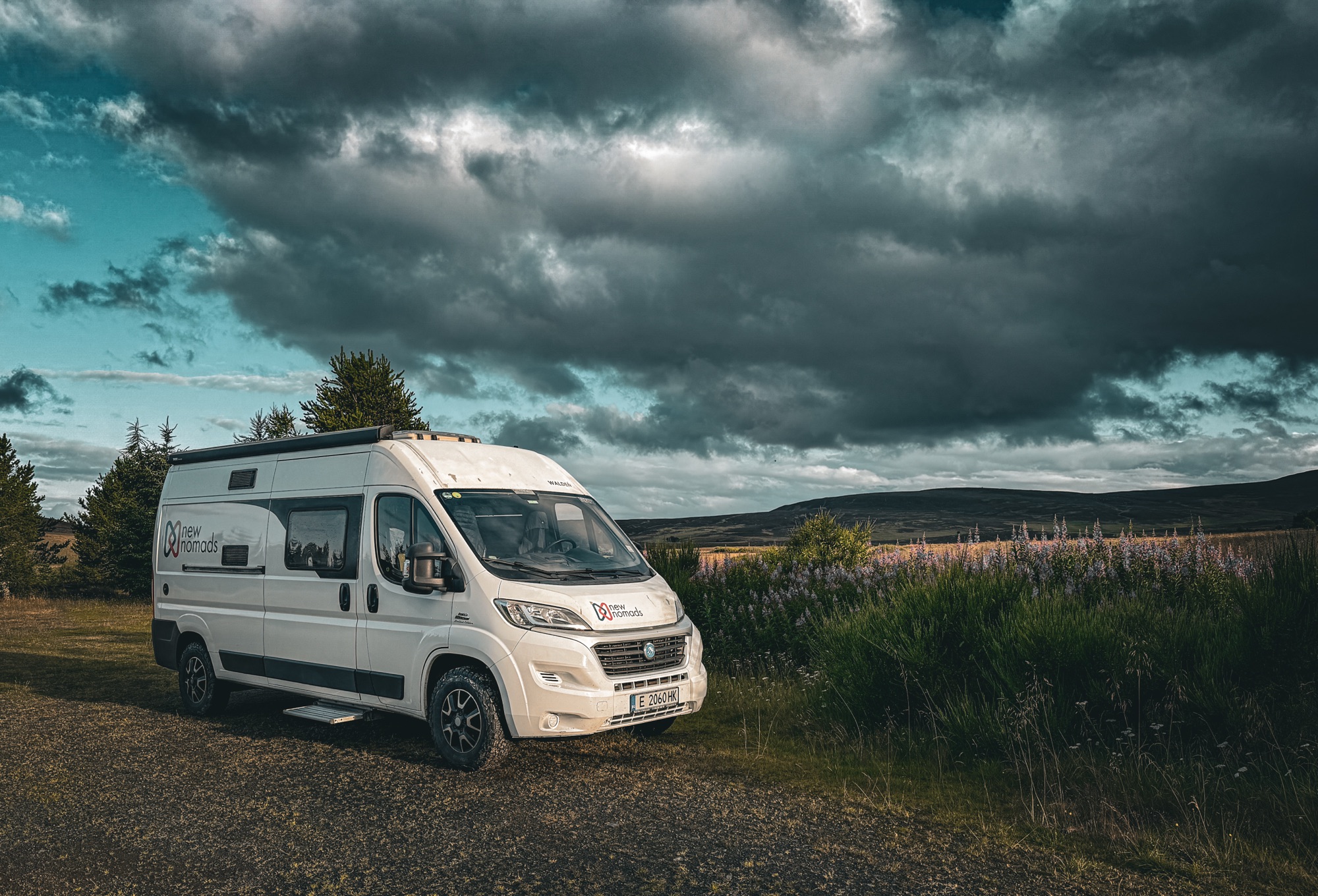
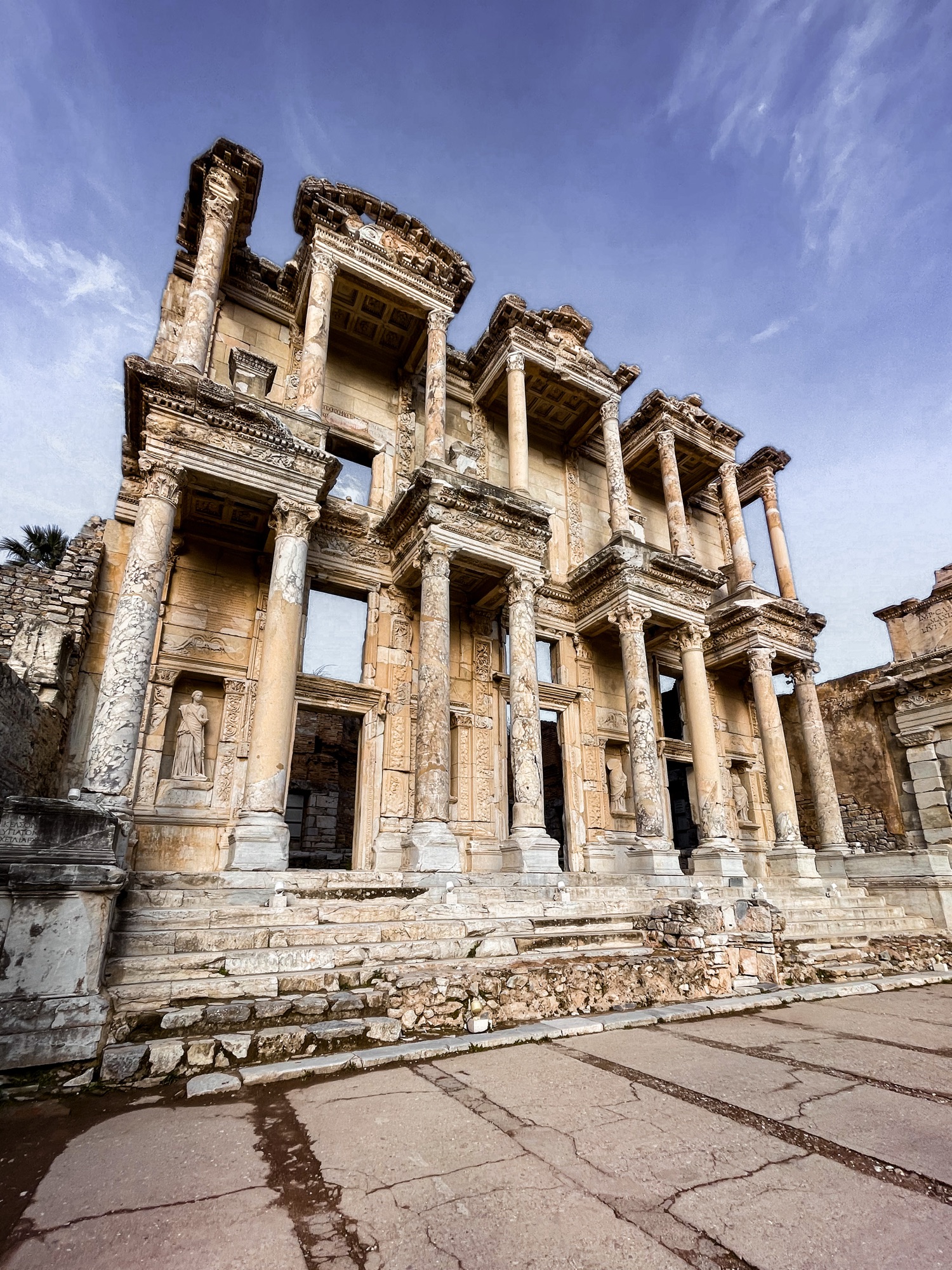
We had read the warnings. By mid-morning the site fills with coaches from the cruise ships docked down the coast at Kuşadası, and the marble lane to the Library of Celsus turns into a slow river of sun hats and raised phones. So we did the one thing that made sense of the whole day. We left Walden in a car park with more cats than cars, stood at the gate before it opened, and were among the first handful of people the guard waved through a little after it did.
For the first hour, one of the greatest cities of the ancient world was very nearly ours alone.
The hour the city was empty

You do not expect silence at a place this famous. That is what caught us first, before any single ruin did. No coaches idling, no guide counting heads, no queue folding back on itself in front of the library. Just birdsong, the scuff of our own shoes on two-thousand-year-old paving, and a light that had not yet hardened into the white glare of midday. The absence was the thing. We kept waiting for the crowd to appear and prove we had misread the opening time, and it kept not appearing.
We walked down Curetes Street slowly, because there was no reason to do anything quickly. Column bases and fallen capitals lined the way, and the marble underfoot had been worn by so many centuries of feet that it shone. Every few steps opened onto something: a fountain, a fragment of inscription, the ghost of a shopfront. With no one to move around, you notice how a city was actually built to be moved through, and how much of it was made simply to be beautiful.
Down to the agora and the terrace houses

The lower agora sat open and empty, its edges ringed with the stumps of the colonnade that once shaded the market traders. We stood in the middle of it and tried to picture the noise it was built for: the haggling and the gossip, the cargo carried up from a harbour that has since silted away to quiet farmland. It is easier to imagine a place full when you are the only one standing in it.

We paid the extra for the Terrace Houses, and that morning it felt like being handed the keys to someone’s home. Under a vast protective roof, a hillside of Roman townhouses climbs in tiers, and you walk above them on glass and steel with the rooms opening beneath your feet. These were the addresses of the wealthy, and it shows: underfloor heating, private courtyards, walls still holding their painted panels after all this time.

The floors are what stopped us. Mosaic after mosaic, set tile by tile by hands we will never know, geometric borders and sea creatures and patterns that would look at home in a design studio tomorrow morning. In an empty room, with no one waiting behind you to move on, you can stand over a floor and simply look until you have really seen it.
Standing alone in the theatre

Then the Great Theatre, and this is the part I keep coming back to. It seats something like twenty-five thousand people, cut into the side of the hill, and when we reached it there was no one else inside it at all. I walked down to the centre, to the worn stone where the sound gathers, and I stood there by myself.
I am not usually one for grand feelings at monuments. But standing alone at the middle of that vast, silent bowl, I found myself thinking about who else had stood on exactly this spot. Actors and orators and rioting crowds. People two thousand years dead, on the same stone, under the same sky, looking up at the same sweep of seats. The distance of time between us went briefly, physically real. I said something quietly, just to hear the way the theatre carried it, and then I stopped, because it felt like enough.
That is what the early start really buys you. Not a shorter queue. Room enough around a place to let it land. A theatre with twenty-five thousand empty seats says something to one person standing at its heart that it can never quite say to a thousand.
The eternal residents

We were not entirely alone, of course. Ephesus has cats. They lay along the warm tops of fallen columns, threaded between our ankles on the marble street, and watched us from the shade of two-thousand-year-old doorways with the settled indifference of creatures who know they own the place. Every empire that built here has come and gone. The cats remain. They are the city’s real caretakers now, and they carry the post with enormous dignity.

By the time we climbed back toward the upper gate, it was starting. The first coach, then the second. Voices in a dozen languages, a guide’s umbrella held up like a flag, the queue beginning to form in front of the library we had stood before alone an hour earlier. We were not sorry. We had already been given the version of Ephesus most visitors never get, and watching the crowds arrive felt like handing the city back to the day it was expecting.
A queen and a lion at the museum

From Ephesus we drove the short way into Selçuk and made the museum our next stop, where a good deal of the site’s finest detail has been brought in to be kept out of the weather. We wanted it in that order. Walk the empty city first, feel the shape of the streets and the scale of the houses, and only then stand in front of the pieces lifted from them. The setting makes sense of the artifacts, and the artifacts hand the setting back to you sharper than before. The great statues of Artemis are here, carved down their fronts with rows of what may be bees, or eggs, or offerings, depending on which scholar you believe. The bee was the emblem of the city, stamped on its coins, and she watches the room with the same steadiness as the cats outside.

And a lion, worked in stone so small and so patient that it has held its expression across the centuries. We stood in front of it in the cool and the quiet, the whole strange morning settling into something we would keep. You come to a place like Ephesus for the library and the theatre, the postcard views everyone photographs. What we carried away was smaller and harder to frame: one empty hour, the weight of all that time under our feet, and a city full of cats who let us borrow it before the buses came.