
You learn the sounds of your own van the way you learn a house at night: which creaks are nothing and which are worth getting up for. So when a new one arrived in the front left somewhere on the back roads of the northeast, faint and rhythmic and keeping perfect time with the wheel, I knew it did not belong. For about a mile I told myself it was the road surface. Then I stopped telling myself that and pulled over.
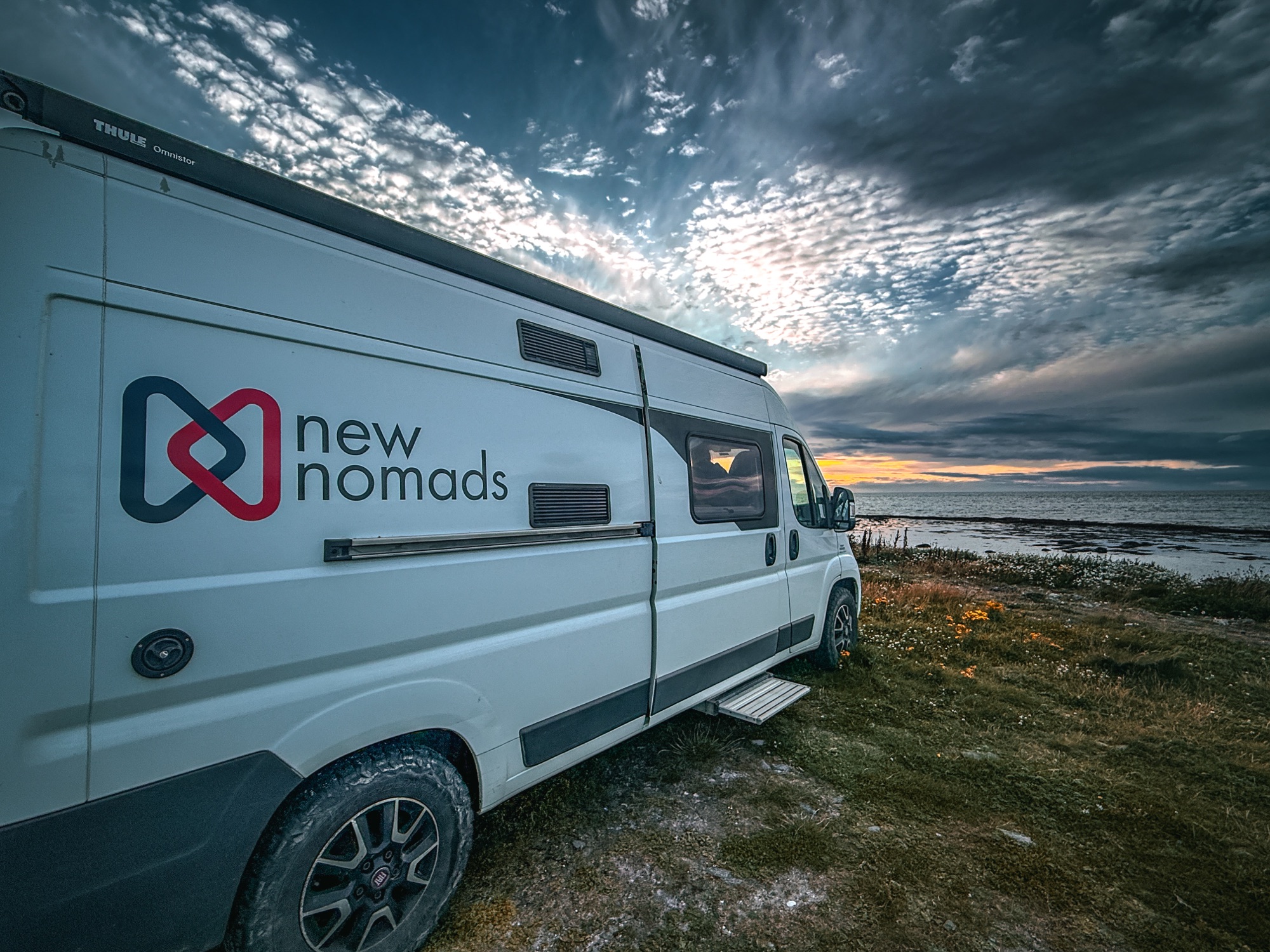
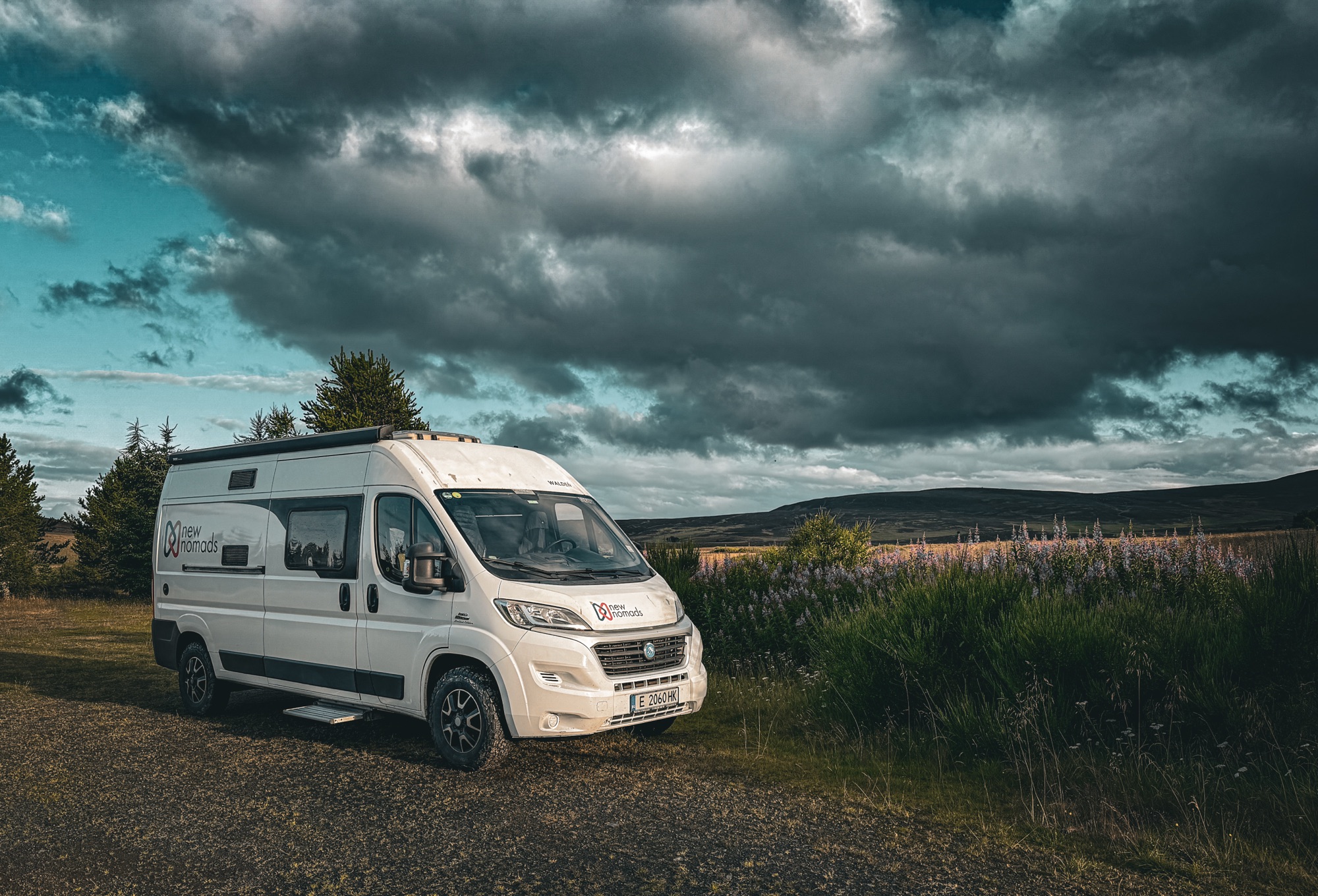
I crouched by the front left wheel expecting a stone caught somewhere, or a stick worked into the arch. What I found instead were two empty holes where two lug nuts should have been. Not loose. Gone, sheared off clean, as though something had decided the wheel had too many and quietly started removing them. Walden is a heavy old Fiat Ducato, and each wheel is meant to be held on by five. We had three.

There is a particular quiet that comes over you at a moment like that, once the arithmetic has landed. Three of five, on the wheel that does the most work, under a van that weighs what ours weighs. Panic has never once tightened a bolt, so we did the only sensible thing and went looking for someone who could. The nearest help was a few miles on, in a town called Keith.
The crawl into Keith
We drove the rest of the way at the speed of a slow walk, hazards blinking, feeling every seam and pothole come up through the floor. I have never been so aware of a single wheel in my life. We reached the Keith Motor Company before it opened, tucked the van into the corner of the car park, and sat there waiting for the town to wake up.

Keith, if you arrive as a visitor, is a whisky town. Strathisla sits just around the corner, one of the oldest working distilleries in the Highlands, and the streets carry the quiet, cared-for look of a place used to coach tours and camera phones. There are quaint shops and old grey stone and the whole gentle theatre of the Speyside trail. You could spend a pleasant day here and never once suspect there is a garage a stone’s throw from all of it. We were not here for that Keith. We were here because our van could no longer be trusted to keep its own wheels attached.
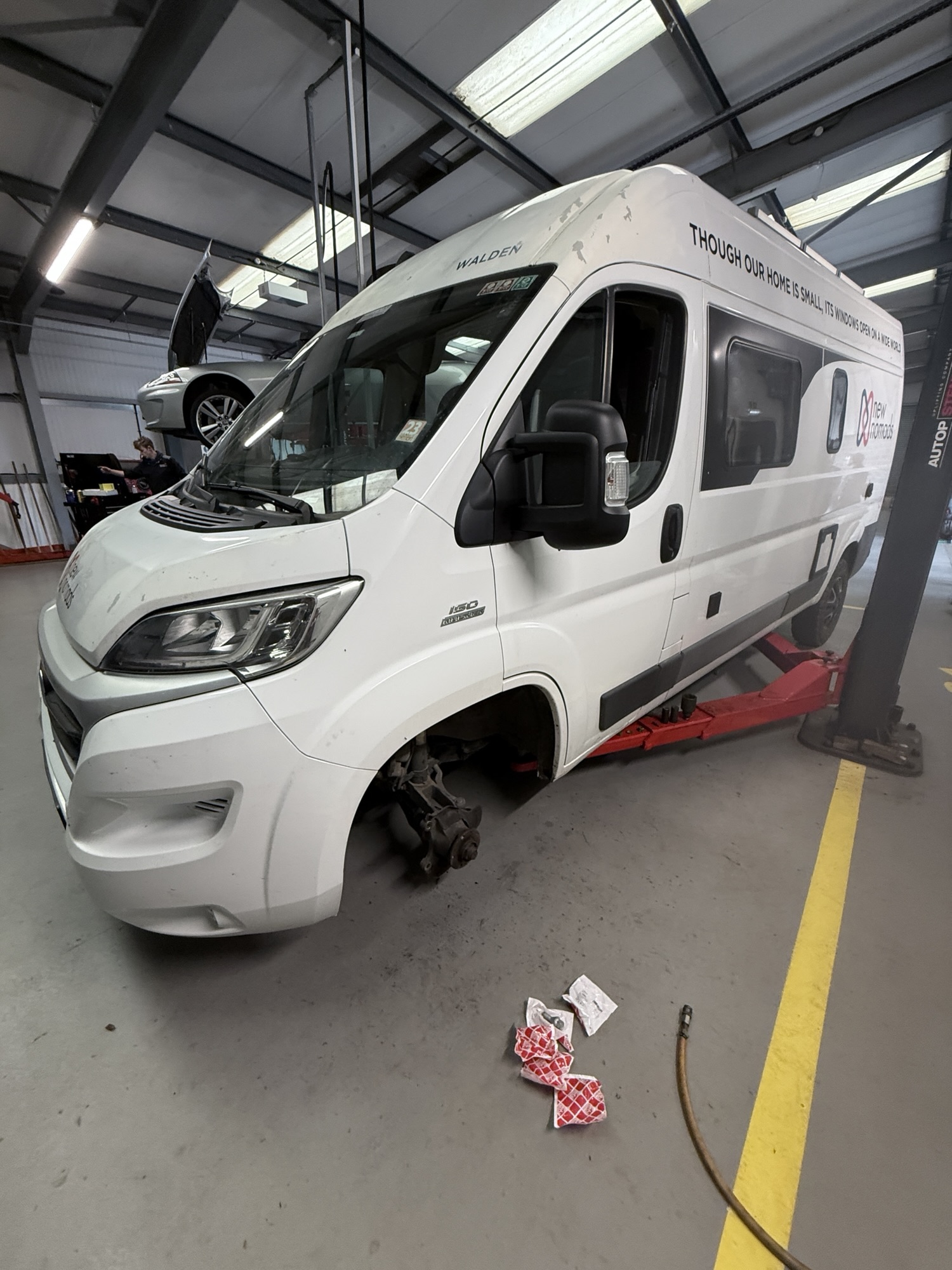
When the doors opened we eased Walden toward the workshop, barely faster than walking. We did not make it. Halfway across the yard, two of the three remaining nuts let go at once, two sharp cracks against the quiet of the morning, and the van settled hard onto the corner. One nut. That was all that stood between the wheel and the ground now.

The mechanic did not hesitate. He read the whole situation in about a second, told us to stop exactly where we were, and had a jack under the van before I had finished explaining what had happened. He lifted the corner, and as he did the final nut simply gave up and dropped out onto the concrete of its own accord. It had carried us as far as it possibly could and not ten feet further. Another minute out on the road and that wheel would have been somewhere behind us in a ditch.

Ewan and the Keith Motor Company
His name was Ewan, and he spoke in a brogue so thick and so quick that I caught perhaps two thirds of it on the first pass and nodded hopefully at the rest, trusting the important parts to come round again. What came through without any trouble at all was the seriousness he brought to the work. He was fiercely, wonderfully Scottish about doing the job properly: unhurried but never casual, the sort of man quietly offended by a thing done halfway. The shop around him matched him. It was clean, modern, everything squared away and in its place, the exact opposite of the greasy chaos the word garage sometimes brings to mind.
The hub itself turned out to be the real trouble, and the parts to put it right would take two days to arrive. Two days is a long time to be stranded in a town you never planned to visit, and this is where the Keith Motor Company went from merely competent to something better. They handed us the keys to a loaner car so we were not marooned, treated us less like a breakdown and more like guests who had turned up early, and got on with the work. Two days later Walden came off the rack sorted, sound, and ready for the road.

The town behind the town
We came away thinking about the two Keiths. There is the one the visitors see, the distilleries and the shopfronts and the soft Speyside light, and there is the one behind it, the working town that keeps the lights on and fixes what breaks. Most of us only ever meet the first. You have to have something go wrong to be shown the second, and it is almost always the better of the two. The road has a way of handing you the real version of a place at the exact moment you stop being a tourist and start needing a neighbour.
We went to Keith for whisky we never tasted, and left with something we will remember far longer: a wheel put right, a loaner car in the meantime, and Ewan, who caught our van at ten feet and would not let it roll one foot further.