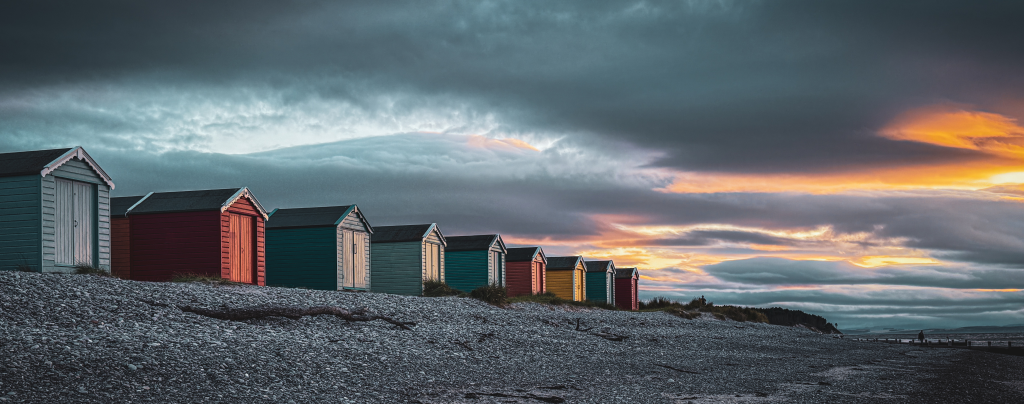

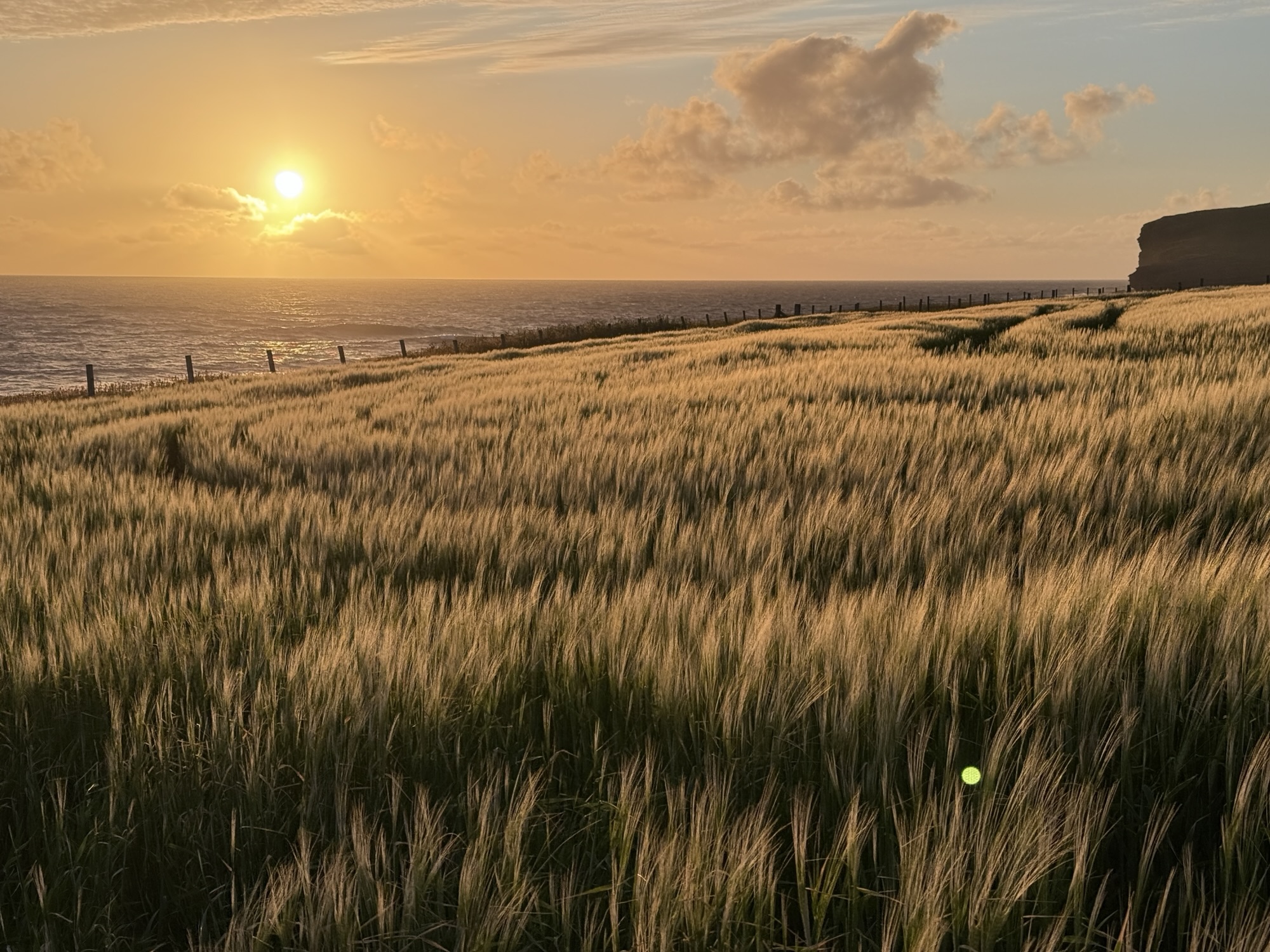
The alarm on Orkney is the light, not a clock. It comes early and sideways this far north in July, slipping under the blind long before we mean to be awake, and most mornings we give in to it, pull jumpers on over pyjamas, and walk down to whatever beach we have parked beside for the night. This week it has been a different one nearly every day.

We are not on holiday
It matters, that distinction, more than it sounds. People see the van and the beaches and assume we are on the trip of a lifetime, that any day now the leave runs out and real life resumes somewhere with a mortgage and a Monday. But this is real life. We are not on vacation in Orkney; we simply live here this week, the way we lived last week in Findhorn and will live next week somewhere further south. There is no countdown running in the back of our minds, no last-day melancholy, no need to cram it all in before Sunday. When you are not visiting, a beach stops being a thing to tick off and becomes, quietly, just where you happen to live for now.
And that changes how you walk it. There is no rush to reach the famous one, no anxiety about whether this is the right beach or whether the better one is around the next headland. We can walk the same stretch three mornings running and let it be different each time, because the tide and the light have done the work of making it new.
The beaches themselves
Orkney is stitched together from beaches. For a group of islands you could drive across in an afternoon, the sheer number of them is faintly ridiculous, long pale crescents of shell-sand, coves the size of a room, wide flats where the sea goes out so far it seems to have changed its mind. On the bright mornings the water turns a colour that belongs somewhere far warmer, a clean green-blue over white sand, and the only things that give away the latitude are the wind and the fact that you are, sensibly, wearing everything you own.

Best of all, they are empty. Not quiet, empty. We have had two-mile beaches entirely to ourselves, the only footprints ours and, further up, a set of small deliberate ones belonging to a wading bird. You forget, living in cities, that a place can simply be unpeopled; that you can stand at the edge of a whole ocean and hear nothing built by anyone.


The access is the whole point
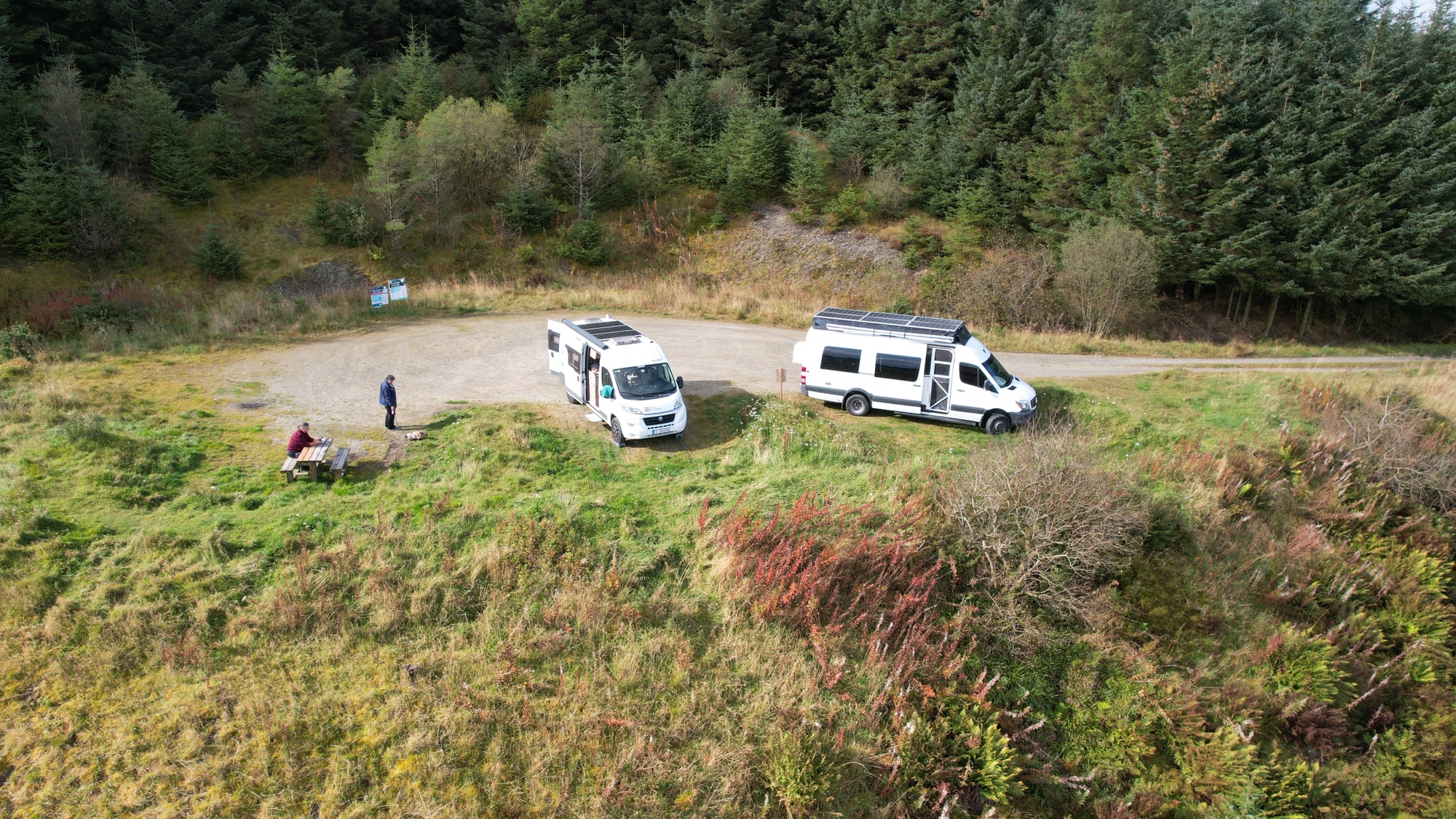
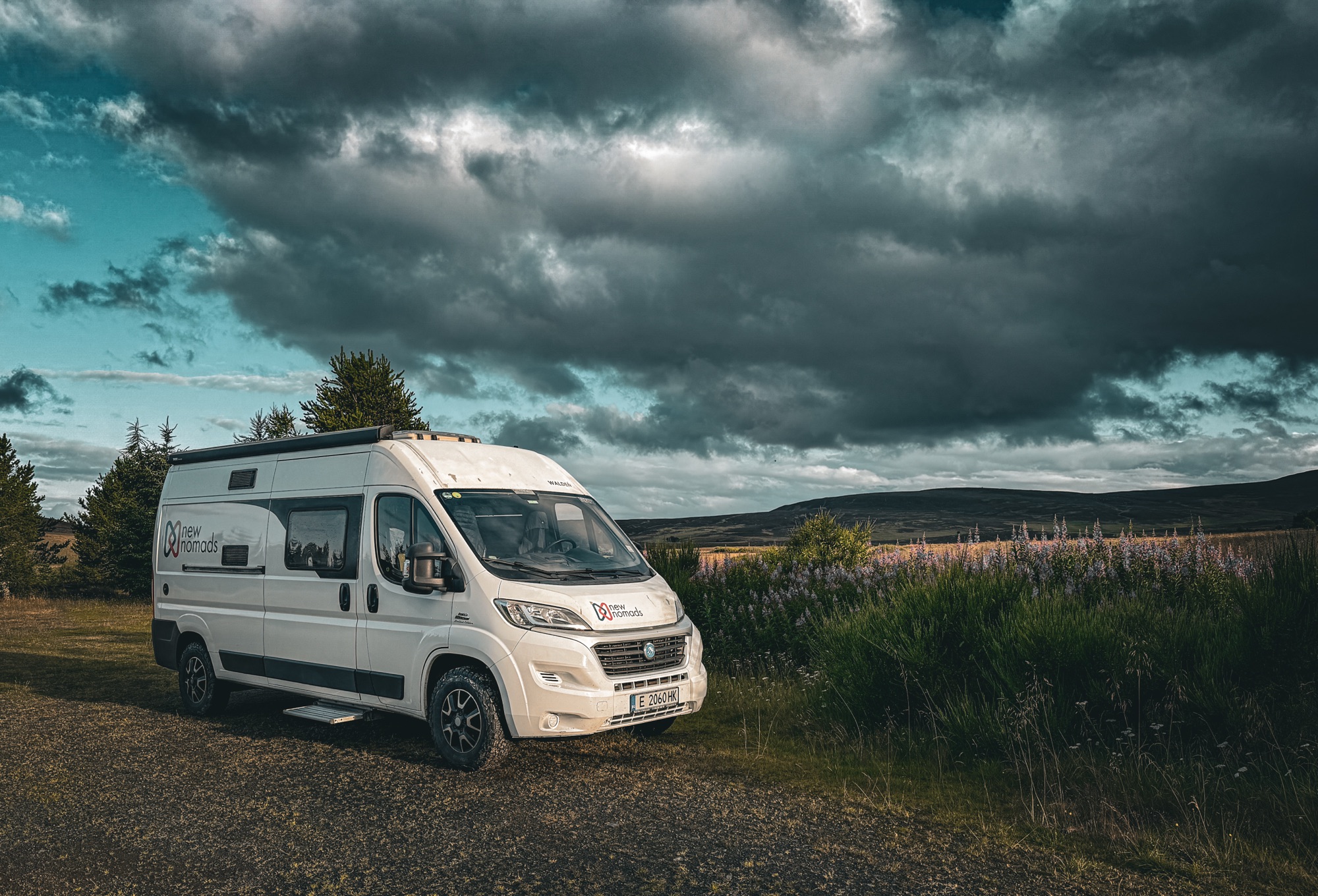
This is the thing we keep coming back to, standing on yet another beach with our coffee going cold in our hands: this is why we live in the van. Not the van itself, the access it gives. Places like these used to live on a list somewhere, the kind you keep meaning to get to, the “travel dreams” that stay dreams because reaching them properly takes more time and money and nerve than an ordinary fortnight allows. The van dissolves that. We wake up at the trailhead. The dream and the doorstep become the same place.

There is no ferry to catch back to a hotel, no hire car to return, no sense that the good part is happening at arm’s length through a window. We park where the walk begins, and the walk begins when we open the door. It has taken us years to arrange our lives this way, and mornings like these are the return on all of it.
Walking it together
What we did not quite expect, when we set out on all this, was how much of the pleasure would simply be each other. A long empty beach is a fine place to be a couple. There is nothing to organise and nowhere to be, so you talk, or you don’t; you walk in step, or you drift apart to look at different things and drift back together without a word about it. Decades in, we are still finding out what the other one notices: Diane for the small things underfoot, the shells and the sea-glass and the print of a bird; me for the far edge of it, the weather coming, the shape of the next bay.

To experience the world side by side, at walking pace, with no audience and no schedule, turns out to be one of the great quiet luxuries of this life. We are not seeing these places so much as sharing them, and the sharing is most of the point.
The family in the rocks
On our last morning we found neighbours. Where the sand gives way to a tumble of low rocks at the top of one beach, a family of rabbits has set up home among the crevices, a couple of adults and three or four half-grown kits, ears up, entirely unbothered by the sea a few yards off. They watched us with the mild interest of residents watching a car go past, then went back to their breakfast in the grass between the stones.

We stood a long while and watched them, two people who also live in the small gaps between the rocks and the water, and felt something close to kinship. Then we walked back to the van, put the kettle on, and thought, not for the first time this week, that we would be in no hurry to leave. And grateful, as ever, that the leaving is always ours to decide.
More from the same spell in Orkney: two rainy weeks among the standing stones and the Churchill Barriers, and meeting the locals, even when the locals are a herd of cattle.
This post is one of many from our summer in Scotland. You can browse the whole collection in our Scotland journal.