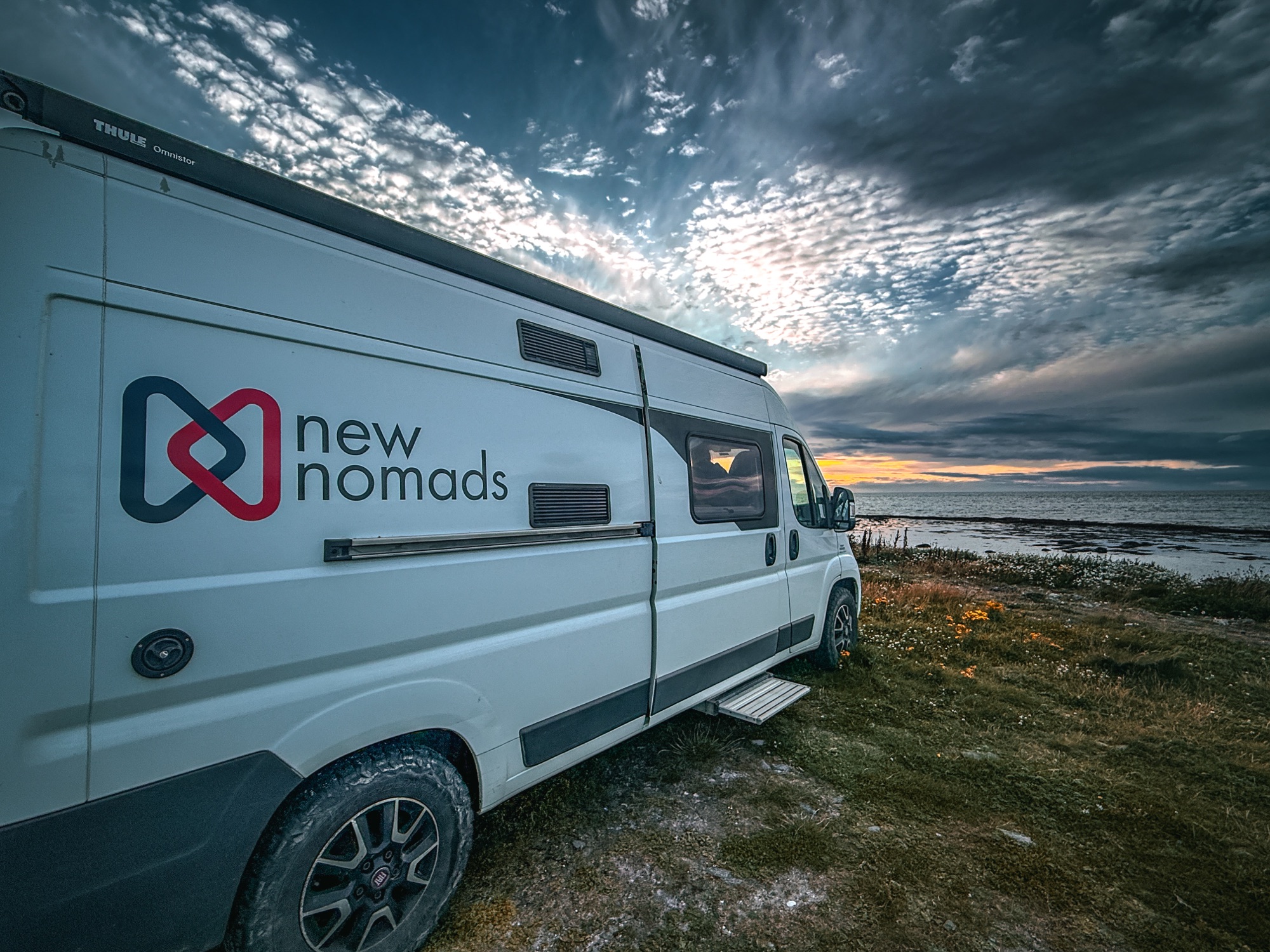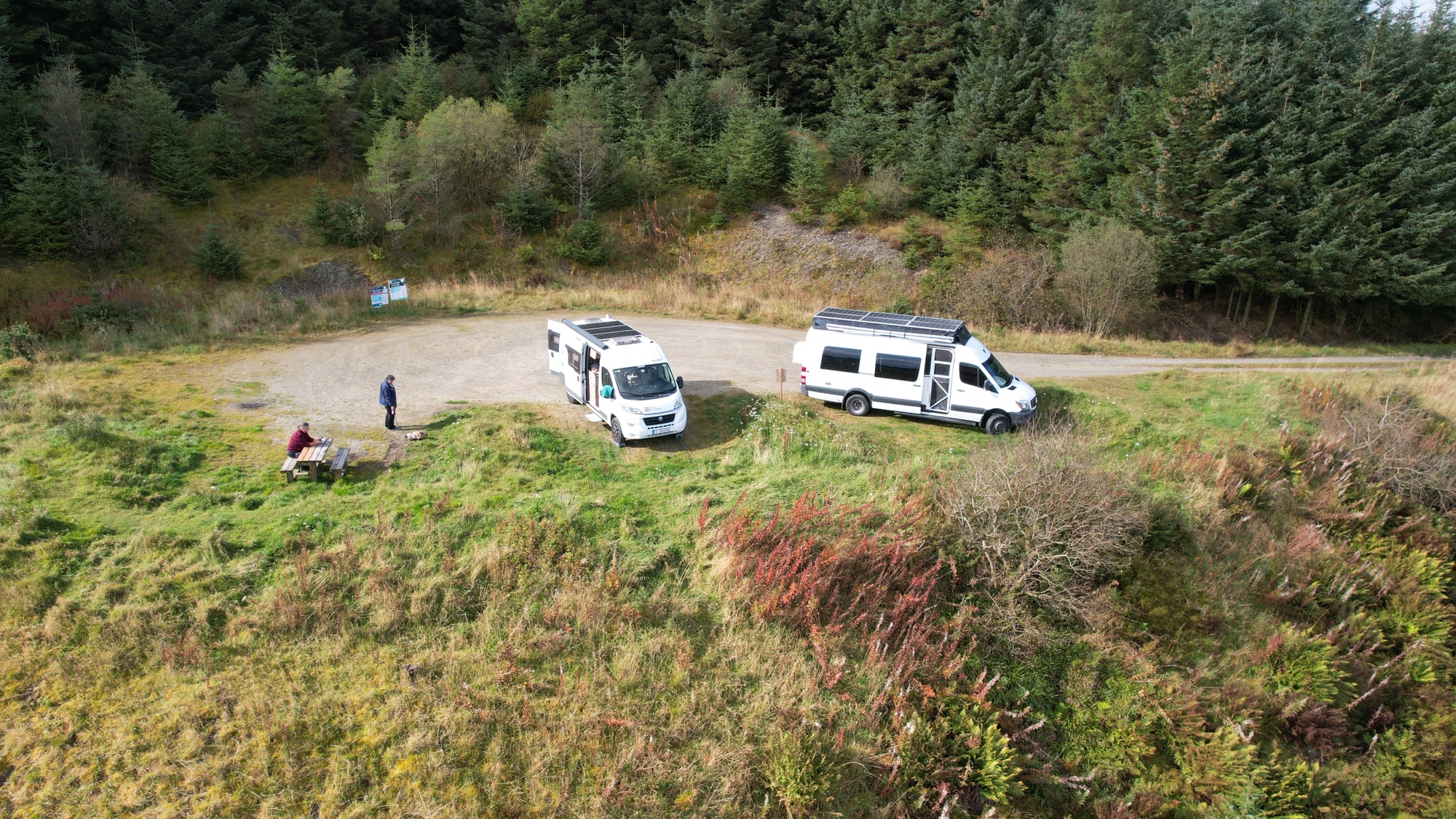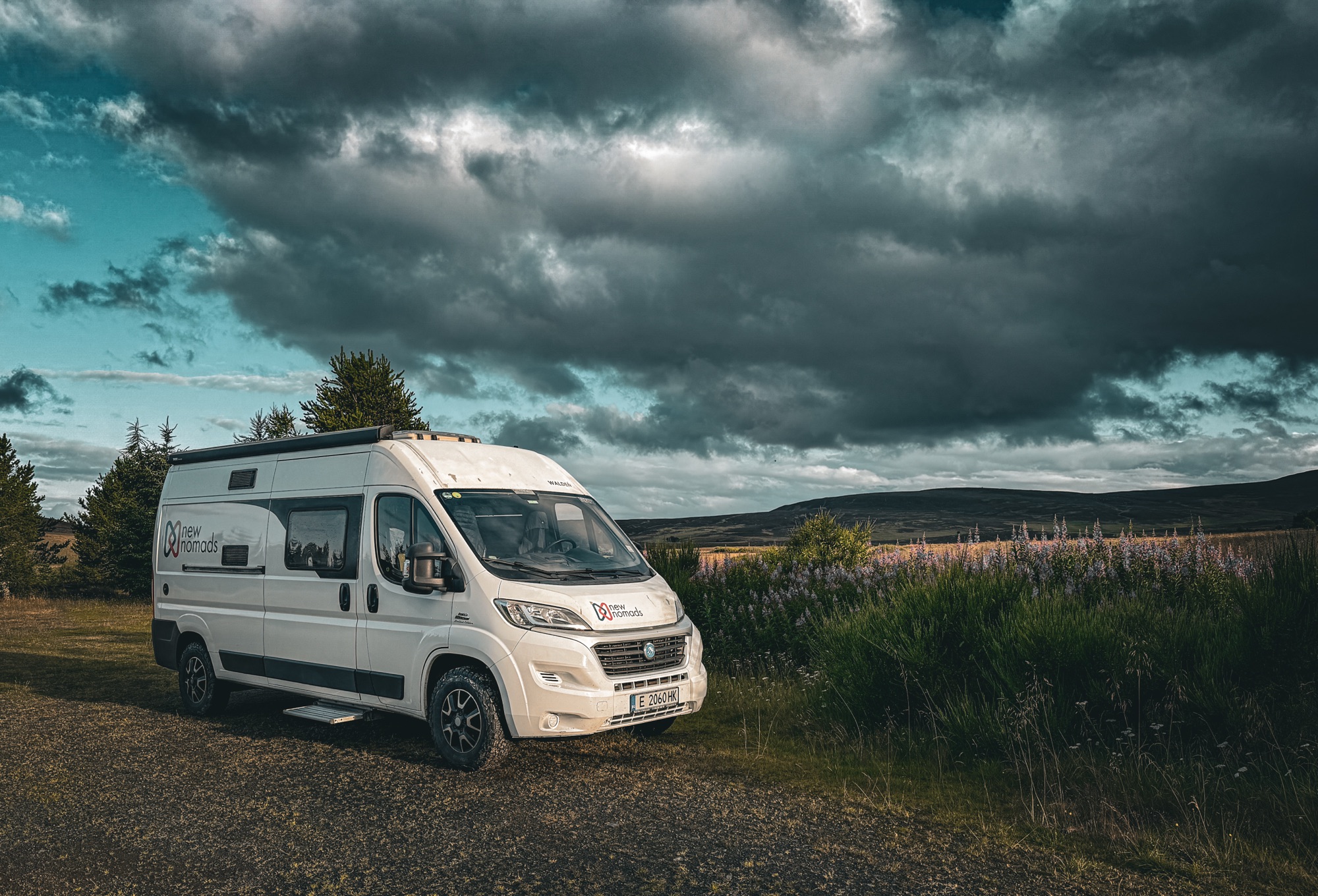

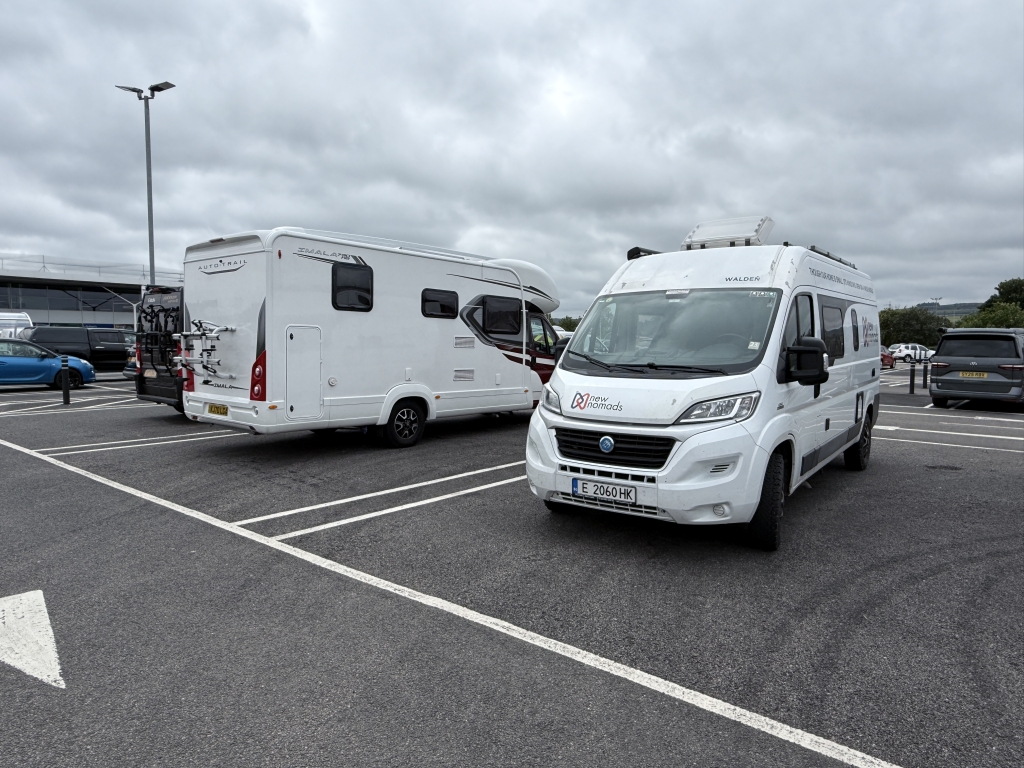
We came into Keith on a grey Tuesday with an empty fridge and the particular wariness a six-metre van teaches you about unfamiliar car parks. Walden, our Fiat Ducato, does not tuck into bays painted for hatchbacks, and we had already backed out of one supermarket that morning where the spaces ran six inches too short and a low steel barrier settled the matter anyway.
So the Tesco on the edge of town came as a small, quiet relief. We saw it as we turned in, long bays, no height barrier, room to pull straight through without folding the mirrors. Diane let out the breath she had been holding since the last car park. I had the kettle on before we had properly stopped, because for once we were not going to have to rush.
Reading a car park the way sailors read a harbour
It is an odd thing to feel grateful for somewhere to park. But when you live on the road, the ordinary business of stopping is never quite ordinary. You learn to read a car park the way sailors read a harbour, where the deep water lies, and where you will run aground, and most mornings you are reading for the barrier, the bollard, the bay that ends too soon. Keith asked none of that of us, and the relief of that is hard to explain to anyone who has only ever parked a car.
What we actually did there
We did the week’s shop properly, because we had the room and the time to. Diane went in for milk and bread and came back with a bag of things we had not planned on. I filled the tank. We topped up the small stuff that always runs low, a bag of coffee, a newspaper, and later found a bakery in the town for lunch. None of that money had existed in Keith when we woke that morning. It arrived with us, and it stayed behind when we drove out.
The quiet economics of a big space
That is the part I keep turning over. A van that can stop easily is a van that stays, and a van that stays spends money that came from somewhere else. Multiply the two of us by a summer’s worth of vans and you begin to see what a welcoming car park is really worth to a small town. The places that make it easy to stop (a level bay, no barrier, a sign that is not all prohibitions) tend to be the places where travellers linger, eat, and come back. The ones that make it hard just watch the traffic pass through on its way to somewhere friendlier.
If you are passing through
For anyone routing through this corner of Moray: the Tesco at Keith has generous bays and no height barrier, easy for anything up to a large motorhome. It is a supermarket car park, not an overnight spot, so we treated it as exactly that, shop, fill up, and move on the same day. Buy something, use the bins, and leave the bay as you found it; the welcome only lasts as long as it is not abused. And Keith is worth more than a fuel stop. It sits on the Malt Whisky Trail, with Strathisla, one of Scotland’s oldest working distilleries, a short walk from the centre, and it makes an unhurried base for Speyside without the crowds you will meet further west.
We pulled out that afternoon with a full tank, a full cupboard, and the small contentment of a day that had gone smoothly. Somewhere a spreadsheet in a regional office will log it as a quiet afternoon’s takings. We would call it a welcome, and we will take the road back through, next time we are this way.
It is one of many ordinary and not-so-ordinary stops we have made in Scotland. Browse them all in our Scotland journal.